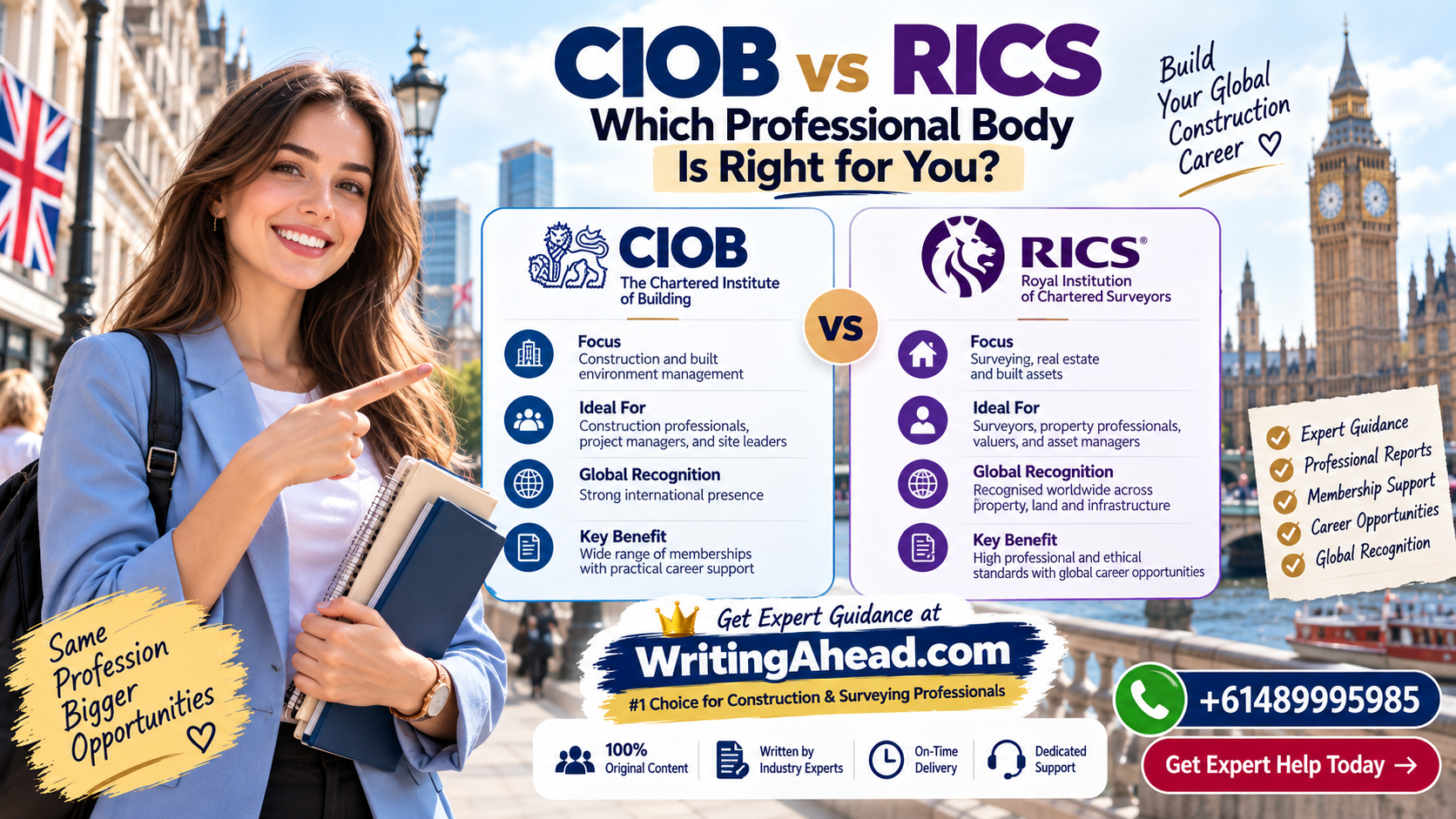
Is CIOB Better Than RICs
 26 September
2026
26 September
2026
Chartered Professional
9 views
26 September
2026
Neither the CIOB (Chartered Institute of Building) nor RICS (Royal Institution of Chartered Surveyors) is universally "better." Instead, they serve different primary purposes within the built environment.
Choosing between them isn't about which is superior; it’s about which one aligns with your specific career path, daily responsibilities, and long-term goals.
Choose RICS (MRICS) if your career focuses on commercial management, cost planning, or property disciplines. Choose CIOB (MCIOB) if your path leads to project management, site leadership, and physical construction delivery.
Here is the strategic, no-fluff breakdown to help you make the right choice for your specific career trajectory.
To make the right choice, you need to understand what each body actually governs on a live project.
The Royal Institution of Chartered Surveyors (RICS), founded in 1868, controls the commercial, contractual, and valuation side of the built environment. Think cost planning, dispute resolution, claims, and quantity surveying.
The Chartered Institute of Building (CIOB), founded in 1834, governs the physical delivery and leadership side. Think programme management, site logistics, quality assurance, and health and safety.
While the Institution of Civil Engineers (ICE) remains the traditional home for design-focused civil engineers, CIOB and RICS are the dominant powerhouses when you pivot toward management, commercial leadership, and project delivery on major infrastructure projects.
Your current job title—and where you want to be in five years—should dictate your choice.
The friction and time commitment required to get chartered vary drastically between the two bodies.
RICS APC (Assessment of Professional Competence): This is a 24 to 48-month marathon. It requires a structured training agreement, a dedicated mentor, and a high-stakes final assessment interview. First-time pass rates hover around 65–70%. Candidates typically report spending 5–10 extra hours per week on top of a full-time job building competency evidence and preparing for the panel.
CIOB Professional Review: This is typically a 6 to 12-month sprint for professionals with 5+ years of experience. It is portfolio-based. Instead of academic-style case studies, you demonstrate the competence, ethics, and leadership you have already built on site. It assesses what you do in the real world, not just what you know in theory.
Many mid-career engineers (ages 28–35) get stuck in "APC limbo." Maybe their employer changed, their mentor quit, or their role organically shifted from pure quantity surveying to broader project management.
Individual ROI: MRICS commands a well-documented salary premium, often adding £10,000 to £16,000+ to mid-level salaries in the UK. The MCIOB premium is more variable, but it acts as a powerful glass-ceiling breaker for site managers transitioning into senior management or director-level roles, where the higher pay is baked into the new salary band.
Employer ROI: This is exactly why companies sponsor chartership. Bidding for major infrastructure frameworks (like National Highways or Network Rail) frequently mandates a specific percentage of chartered staff on the project team. Furthermore, achieving "Chartered Consultancy" status through either body can directly lower a firm’s Professional Indemnity (PI) insurance premiums.
Actionable Tip: When asking for sponsorship, frame it as a business case: "Achieving my MCIOB/MRICS will directly support our upcoming tender for [Project Name] by meeting the chartered staff requirement. I am requesting two hours of protected study time per week to ensure we hit that milestone."
The industry is changing, and your professional body should reflect where the market is heading, not just where it has been.
"Global recognition" is a vague term. Here is exactly where each designation holds real-world power:
Yes. "Dual chartership" is a massive differentiator for aspiring Directors and senior executives.
The Blueprint: Secure your MRICS first to establish undeniable technical and commercial credibility. Later, leverage your existing RICS competencies to fast-track the CIOB Professional Review. This signals to the board that you have successfully transitioned from a technical expert to a holistic business leader who understands both the balance sheet and the build.
Still mapping out your 5-year plan? Download our free Civil Engineering Career Roadmap or book a 15-minute mentorship chat to pinpoint the exact chartership pathway for your specific role.